Friday, 19 January 2018

Facebook Password Stealing Apps Found on Android Play Store


Even after many efforts made by Google last year, malicious apps always somehow manage to make their ways into Google app store.

Security researchers have now discovered a new piece of malware, dubbed GhostTeam, in at least 56 applications on Google Play Store that is designed to steal Facebook login credentials and aggressively display pop-up advertisements to users.

Discovered independently by two cyber security firms, Trend Micro and Avast, the malicious apps disguise as various utility (such as the flashlight, QR code scanner, and compass), performance-boosting (like file-transfer and cleaner), entertainment, lifestyle and video downloader apps.
Like most malware apps, these Android apps themselves don’t contain any malicious code, which is why they managed to end up on Google's official Play Store.

Once installed, it first confirms if the device is not an emulator or a virtual environment and then accordingly downloads the malware payload, which prompts the victim to approve device administrator permissions to gain persistence on the device.
facebook-account-hacking
"The downloader app collects information about the device, such as unique device ID, location, language and display parameters," Avast said. "The device’s location is obtained from the IP address that is used when contacting online services that offer geolocation information for IPs."

How Android Malware Steals Your Facebook Account Password


As soon as users open their Facebook app, the malware immediately prompts them to re-verify their account by logging into Facebook. Instead of exploiting any system or application vulnerabilities, the malware uses a classic phishing scheme in order to get the job done.

These fake apps simply launch a WebView component with Facebook look-alike login page and ask users to log-in. Apparently, WebView code steals the victim's Facebook username and password and sends them to a remote hacker-controlled server.

"This is most likely due to developers using embedded web browsers (WebView, WebChromeClient) in their apps, instead of opening the webpage in a browser," Avast said.

Trend Micro researchers warn that these stolen Facebook credentials can later be repurposed to deliver "far more damaging malware" or "amass a zombie social media army" to spread fake news or generate cryptocurrency-mining malware.
Stolen Facebook accounts can also expose "a wealth of other financial and personally identifiable information," which can then be sold in the underground markets.

Security firms believe that GhostTeam has been developed and uploaded to the Play Store by a Vietnamese developer due to considerable use of Vietnamese language in the code.

According to the researchers, the most users affected by the GhostTeam malware reportedly resides in India, Indonesia, Brazil, Vietnam, and the Philippines.

Besides stealing Facebook credentials, the GhostTeam malware also displays pop up adverts aggressively by always keeping the infected device awake by showing unwanted ads in the background.
android-malware
All the apps have since been removed by Google from the Play Store after researchers reported them to the company. However, users who have already installed one such app on their devices should make sure they have Google Play Protect enabled.
Play Protect security feature uses machine learning and app usage analysis to remove (i.e. uninstall) malicious apps from users Android smartphones in an effort to prevent any further harm.

Although malicious apps floating on the official app store is a never-ending concern, the best way to protect yourself is always to be vigilant when downloading apps, and always verify app permissions and reviews before you download one.

Moreover, you are strongly advised to keep a good antivirus app on your mobile device that can detect and block such threat before they infect your device, and most importantly, always keep your device and apps up-to-date.


Wednesday, 17 January 2018

How To Get Android One Launcher With Google Feed On Your Phone (No Root Required)

android one launcher without rooting


Android One devices are Google’s attempt at providing a better experience for Android users purchasing budget devices. Just like the Pixel devices, there is a custom launcher app available for Android One.
While it is designed to work on these devices, determined developers are always in search of ways to bring them to other Android smartphones. Moving ahead on similar lines, the Android developer Amir Zaidi (AmirZ) has managed to develop a port of the Android One launcher present on Xiaomi A1 smartphone.

In September last year, AmirZ released a port of the Google Pixel Launcher that came to Google-made devices with Android 8.0 Oreo. His work inspired other Android launchers to add support for Google Now feed. It was followed by the release of the modded version of the Google Pixel 2 launcher by XDA member paphonb, featuring the Google Search bar at the bottom.

Android One Launcher without root

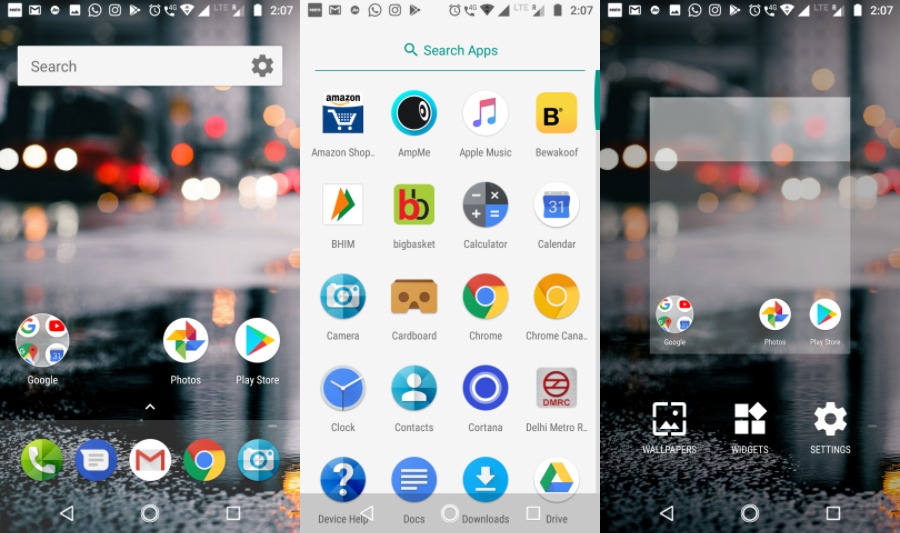
AmirZ’s Android One launcher can be easily sideloaded as it doesn’t require the device to be rooted. Also, it comes with a working Google Now Feed. When compared to the Google Pixel launcher, it has some visual distinctions. The app drawer has a white background.

Android One Launcher without root2|


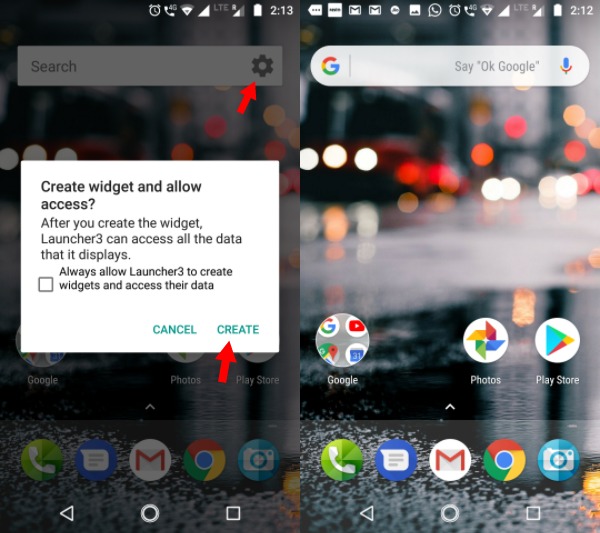
There is one small twist, the rectangle Google search bar on the home screen turns into the rounded one we see on Pixel devices. Just tap on the small gear button and agree to the prompt displayed.
You can download the Android One launcher using this link.

Using BitTorrent For Downloading? This Security Flaw Lets Hackers Control Your PC Remotely

transmission flaw torrent

Even though the popularity of streaming websites is rising at a fast pace, BitTorrent remains a premier source of entertainment content source for a large chunk of people using the web. With the help of tons of popular torrent sites (there are some completely legal ones as well) and BitTorrent clients, people download content.
A recent critical vulnerability spotted by Google’s Project Zero team targets the popular Transmission BitTorrent app. By exploiting this flaw, a hacker can execute malicious code on the users’ computer, according to Ars Technica.

Last week, the Project Zero researchers published the proof-of-concept attack code. It’s worth noting that Project Zero normally refrains itself from making the details of such flaws public for 90 days or until the fix is released. However, in this case, the flaw was made public only 40 days after the initial report. This happened because the report included a patch to fix the vulnerability but Transmission developers didn’t respond on their private security mailing list.
After the public release of the flaw, the downstream projects using the Transmission project would be able to inculcate the patch in their implementations.

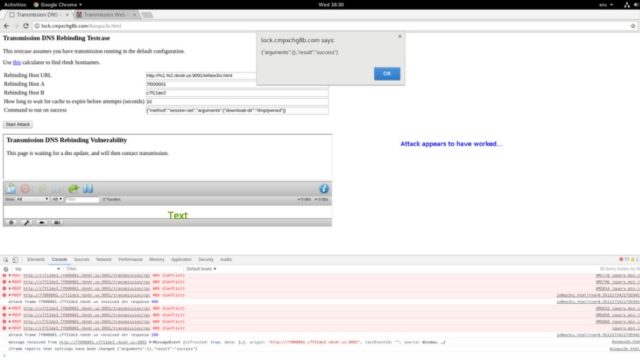
With the help of a hacking technique called domain name system rebinding, this exploit can control the Transmission interface when the target visits a malicious website. This can be further made easier by creating a DNS name which attacker is authorized to communicate with.
After controlling the Transmission interface, the attacker needs to change the torrent download directory to home and download a torrent named .bashrc. The attacker can also configure Transmission to run any command after the download has completed.
The Transmission developers have promised to release the fix as soon as possible. However, no specific date was given.

Tuesday, 16 January 2018

Skygofree — Powerful Android Spyware Discovered

Security researchers have unveiled one of the most powerful and highly advanced Android spyware tools that give hackers full control of infected devices remotely.
Dubbed Skygofree, the Android spyware has been designed for targeted surveillance, and it is believed to have been targeting a large number of users for the past four years.

Since 2014, the Skygofree implant has gained several novel features previously unseen in the wild, according to a new report published by Russian cybersecurity firm Kaspersky Labs.

The 'remarkable new features' include location-based audio recording using device's microphone, the use of Android Accessibility Services to steal WhatsApp messages, and the ability to connect infected devices to malicious Wi-Fi networks controlled by attackers.
Skygofree is being distributed through fake web pages mimicking leading mobile network operators, most of which have been registered by the attackers since 2015—the year when the distribution campaign was most active, according to Kaspersky's telemetry data.

Italian IT Firm Behind Skygofree Spyware?

skygofree-android-malware


Researchers at Kaspersky Lab believe the hacker or hacking group behind this mobile surveillance tool has been active since 2014 and are based in Italy—the home for the infamous 'Hacking Team'—one of the world's bigger players in spyware trading.
"Given the many artifacts we discovered in the malware code, as well as infrastructure analysis, we are pretty confident that the developer of the Skygofree implants is an Italian IT company that works on surveillance solutions, just like HackingTeam," said the report.
Kaspersky found several Italian devices infected with Skygofree, which the firm described as one of the most powerful, advanced mobile implants it has ever seen.

Although the security firm has not confirmed the name of the Italian company behind this spyware, it found multiple references to Rome-based technology company "Negg" in the spyware's code. Negg is also specialised in developing and trading legal hacking tools.

Skygofree: Powerful Android Spyware Tool


Once installed, Skygofree hides its icon and starts background services to conceal further actions from the user. It also includes a self-protection feature, preventing services from being killed.
As of October last year, Skygofree became a sophisticated multi-stage spyware tool that gives attackers full remote control of the infected device using a reverse shell payload and a command and control (C&C) server architecture.

According to the technical details published by researchers, Skygofree includes multiple exploits to escalate privileges for root access, granting it ability to execute most sophisticated payloads on the infected Android devices.

skygofree-android-malware-whatsapp


One such payload allows the implant to execute shellcode and steal data belonging to other applications installed on the targeted devices, including Facebook, WhatsApp, Line, and Viber.
"There are multiple, exceptional capabilities: usage of multiple exploits for gaining root privileges, a complex payload structure, [and] never-before-seen surveillance features," the researchers said.
Skygofree’s control (C&C) server also allows attackers to ca

Credit Card Fraud Reported After People Purchased OnePlus Smartphones

OnePlus Credit Card Fraud main


if you purchased OnePlus devices through the official site in the last few months, your credit card details could be at risk. Many users who bought OnePlus devices later reported suspicious activity on their credit card statement.
According to a security firm Fidus, the issue could be associated with how the payment process happens, not the OnePlus website. The site is developed using the Magento eCommerce platform which the researchers say has been targeted by attackers multiple times.


As the payments page is hosted on the OnePlus site, the credit card details can be intercepted by the attackers. They have a small window before the details get encrypted and sent to the third-party server for processing.
OnePlus Credit Card fraud payment page


In their official response made on the OnePlus forum, the Chinese smartphone maker said they’re investigating the credit card fraud reports and agreed that the buyers who used their credit cards directly to make purchases are among the affected ones.


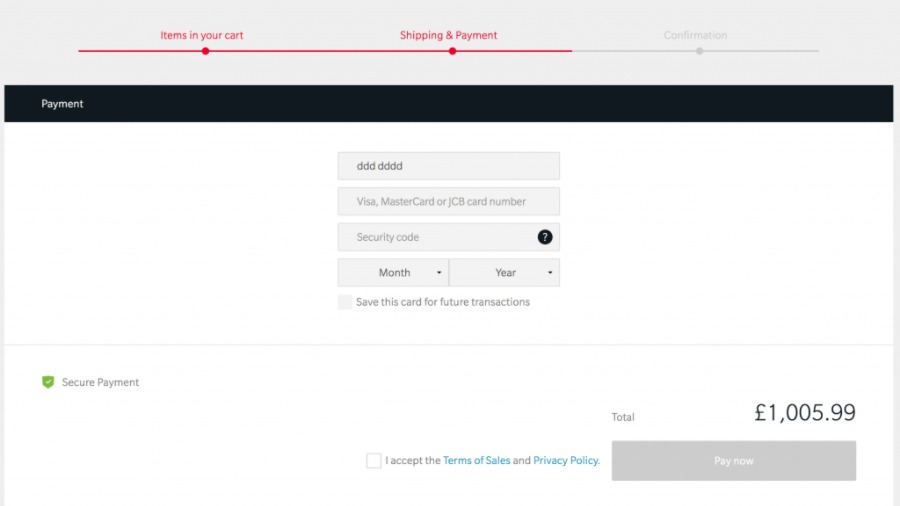
OnePlus said all the payment processing is done on the servers of their payment service provider. When a buyer chooses “Save this card for future tractions,” the card details are stored on the third-party server. The OnePlus site only saves an encrypted token which is used by the payment server to fetch the payment details of the buyer.

OnePlus also clarified that they have been shifting away from Magento platform and re-designing their website with custom code. Also, they never used Magento’s payment module. So, it’s unlikely their site is affected by the Magento bugs discovered in the past.
While the company was quick to issue a statement, it doesn’t seem it would of much help to the buyers who got money sucked from their accounts. People who are seeing unknown transactions in their statement are advised to contact their banks immediately and get things sorted.


Monday, 15 January 2018

Beware! Fake Spectre & Meltdown Patches Are Infecting PCs With “Smoke Loader” Malware

spectre meltdown malware


One of the most common tactics employed by notorious cybercriminals involves taking advantage of the popular trends and creating fraudulent websites/apps to trick users. It looks like some of the players have tried to exploit the confusion surrounding Meltdown and Sprectre CPU bugs.
Forget buggy updates which are causing numerous problems to the users, Malwarebytes has spotted a fake update package that installs malware on your computer. The firm has identified a new domain that’s full of material on how Meltdown and Spectre affect CPUs.


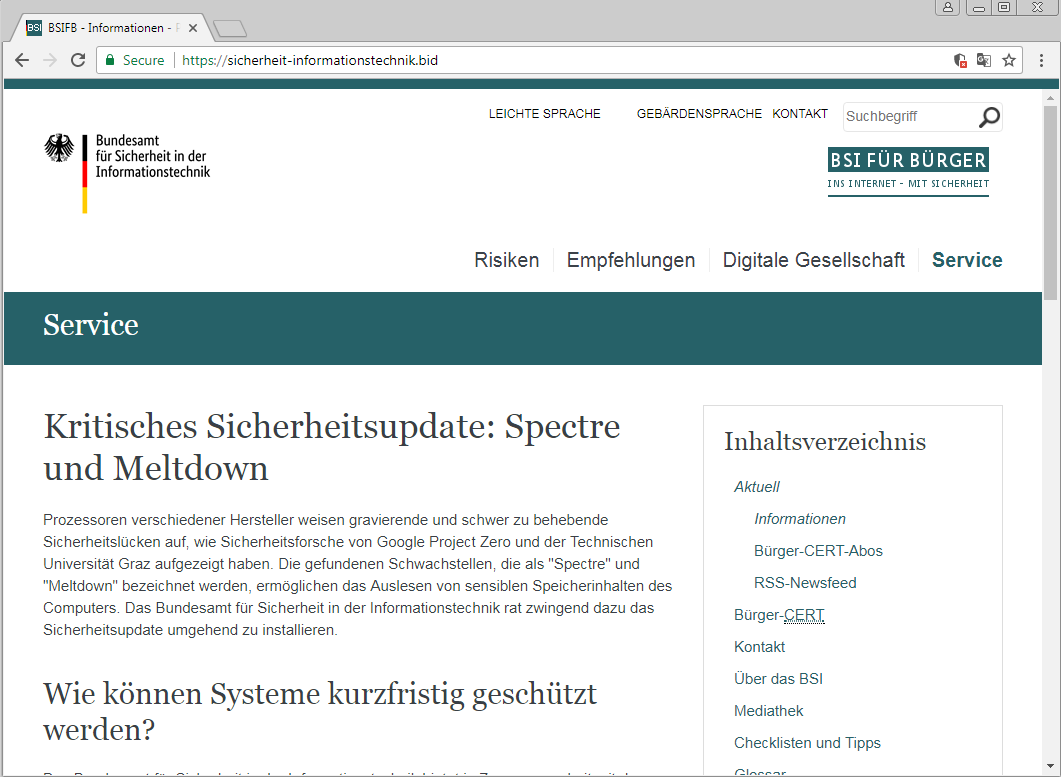
The website appears to have content from the German Federal Office for Information Security (BSI). However, the website is fraudulent and it hosts a ZIP archive link, which is a piece of malware. The fake file in the archive is Intel-AMD-SecurityPatch-10-1-v1.exe.
In case the user downloads the file and attempts to install it, Smoke Loader malware infects the PC. It further downloads more payloads by connecting to various domains and send encrypted traffic.
The website was also spotted sending fake phishing emails. Here’s a screenshot:

fake_German_site meltdown patch

Malwarebytes has already contacted CloudFlare and Comodo regarding this abuse and the site isn’t resolving anymore. But, it doesn’t mean that hackers aren’t trying to exploit such publicized events.
The end-users are advised to always remain cautious and download updates from the dependable sources only. In case you’re getting direct emails or calls from vendors, take them with a grain of salt.

Raspberry Pi Zero WH Hacker Board Launched With Pre-Soldered GPIO Header

raspberry pi zero wh


The Raspberry Pi Foundation is here with a new (not exactly) hacker board that would be surely loved by tinkerers and makers. Named Raspberry Pi Zero WH, it’s a new variant of existing Zero W.

H in Zero WH stands for “header.” This makes sense as it comes with a professionally soldered header. It would be useful for the people who don’t own a soldering iron or who want to get that work done by somebody else.

With this new variant, the users can use Foundation’s GPIO expander software to access a Pi Zero’s GPIO pins from your computer running Debian Stretch or Mac. With this tool, you don’t need to use SSH while taking advantage of computer’s processing power.
This decreases the overall setup costs and provides great accessibility everywhere. It goes without saying that it’s just a single use case.
“You may want the header for prototyping before you commit to soldering wires directly to a board. Or you may have a temporary build in mind for your Zero W, in which case you won’t want to commit to soldering wires to the board at all,” as per the announcement post.
While your applications might differ, Raspberry Pi Zero WH is surely a sweet addition to the Pi family. The product is available with limited availability at the moment. You can find it on PiHut.com, at 13.40 UK Pounds ($18.40).
Is there any specific Raspberry Pi project that you find interesting? Do share your views and start building something new today.

operating system quick guide

Operating System - Overview An Operating System (OS) is an interface between a computer user and computer hardware. An operating system ...